Archives in Motion: Team Dresch, Queeruption and cultures of queer DIY
Ticket(s)
Event Details
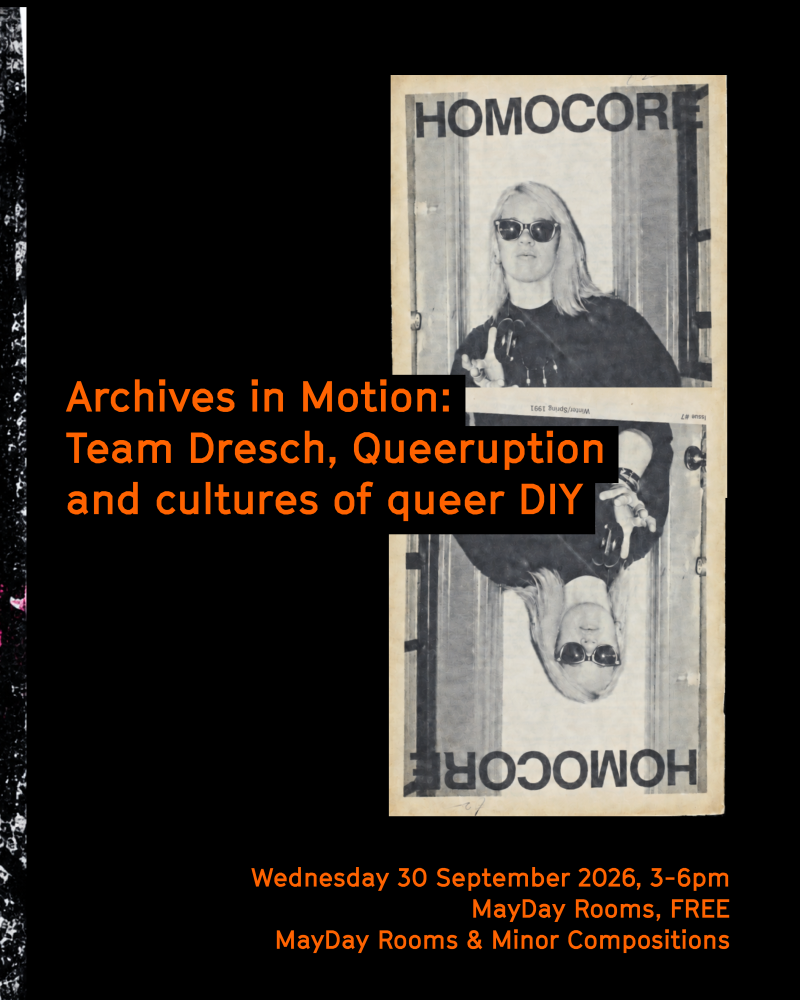
On 30 September 2026, pioneering queercore band Team Dresch will perform at the Dome as part of their first European tour in many years. The band describes the concert as its first London appearance in thirty years, making it a significant occasion for several generations shaped by queer punk and underground culture.Formed in the early 1990s, Team Dresch were central to the development of queercore as a musical, political and cultural formation. Their work brought together fiercely inventive punk music with uncompromising accounts of queer desire, alienation, friendship and survival. Their importance extended beyond the band itself: its members produced zines, operated independent record labels, booked their own tours and participated in wider networks of feminist and queer cultural production. Team Dresch's records helped make queer experience audible within punk while demonstrating how music, publishing, political organising and the creation of alternative infrastructures could sustain one another.
This event will take place 3-6pm, to give people time to get to the gig afterwards.
The event will activate materials from MayDayRooms' holdings connected to queer punk, DIY publishing and underground culture, primarily the Queeruption & Associated collection. Queeruption was an international series of DIY queer festivals held between 1998 and 2010, frequently in squatted or autonomous spaces. The MayDay Rooms collection contains ephemera from the early festivals alongside queer zines from the 1990s, offering rich points of connection with the cultural networks from which Team Dresch emerged. Rather than presenting the materials as a conventional exhibition, the event will be organised as an informal and participatory archival encounter. A selection of posters, flyers, programmes, zines, photographs and other ephemera would be placed around the room, with short introductions to the Queeruption collection and the broader histories it documents. Participants can browse the materials, discuss their own experiences and consider the relationships between queer punk, autonomous spaces, self-publishing, touring networks and collective forms of cultural organisation.